Your Cart
Sub-Total: $0.00

This manual includes an educational identification process for special education eligibility through establishing a significant history of TBI.
Read More
This review provides a general overview of the bidirectional relationship between TBI and AUD and a discussion of potential neuropsychological and neurobiological mechanisms that might underlie the relationship.
Read More
Toolkit for providers to understand the effect of TBI on substance abuse, effective screening measures, and how best to deliver treatment.
Read More
Effective new and modified approaches to treating substance abuse in individuals with TBI.
Read More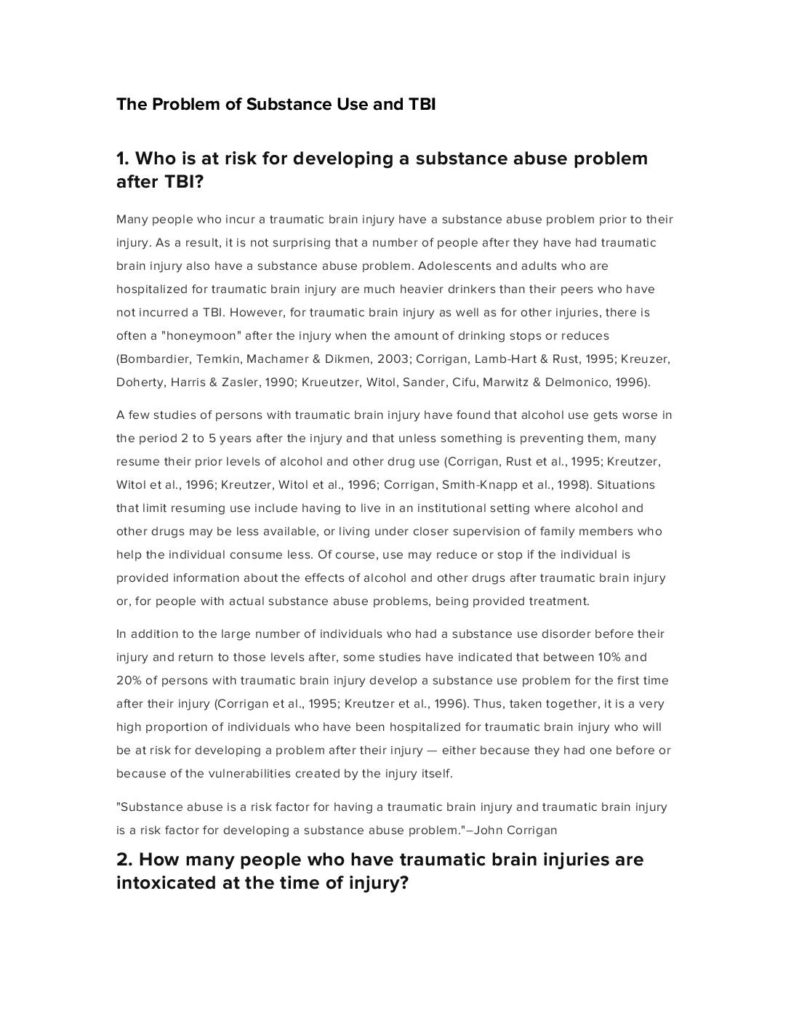
Information about substance use before and after TBI and during treatment.
Read More
Provides reasons why alcohol and other drug use after traumatic brain injury is not recommended. Demonstrates the effects of substance use on the brain following TBI.
Read More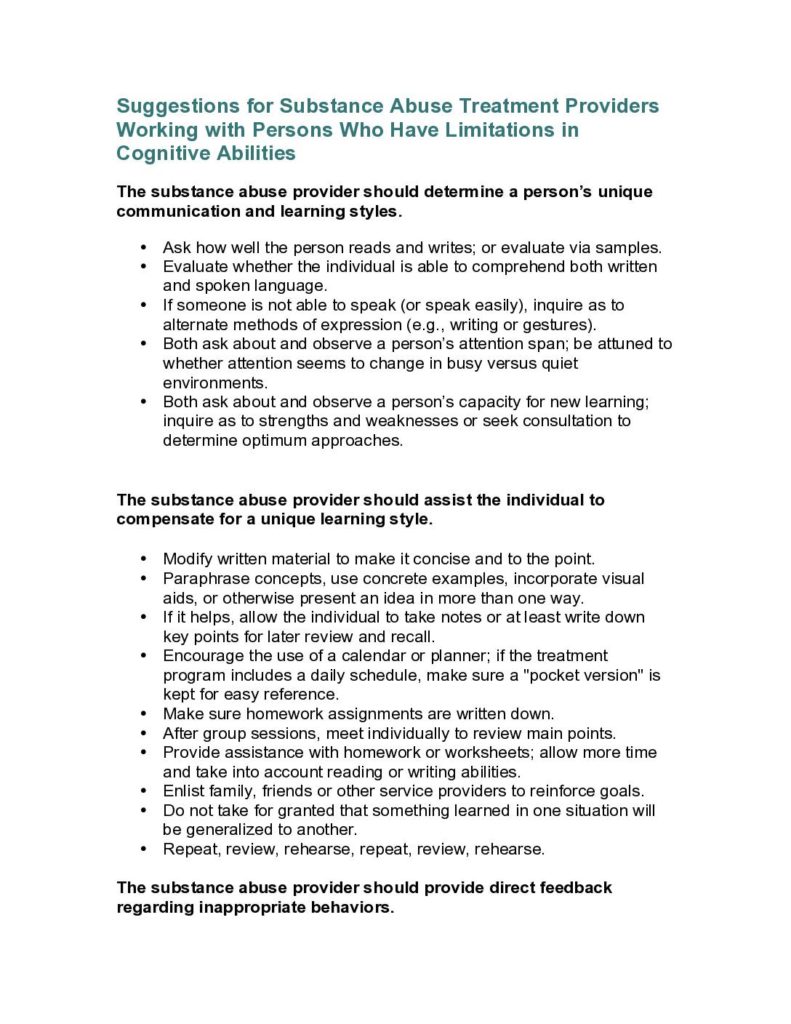
Provides guidance and strategies for substance abuse treatment providers working with persons with brain injury or cognitive impairments.
Read More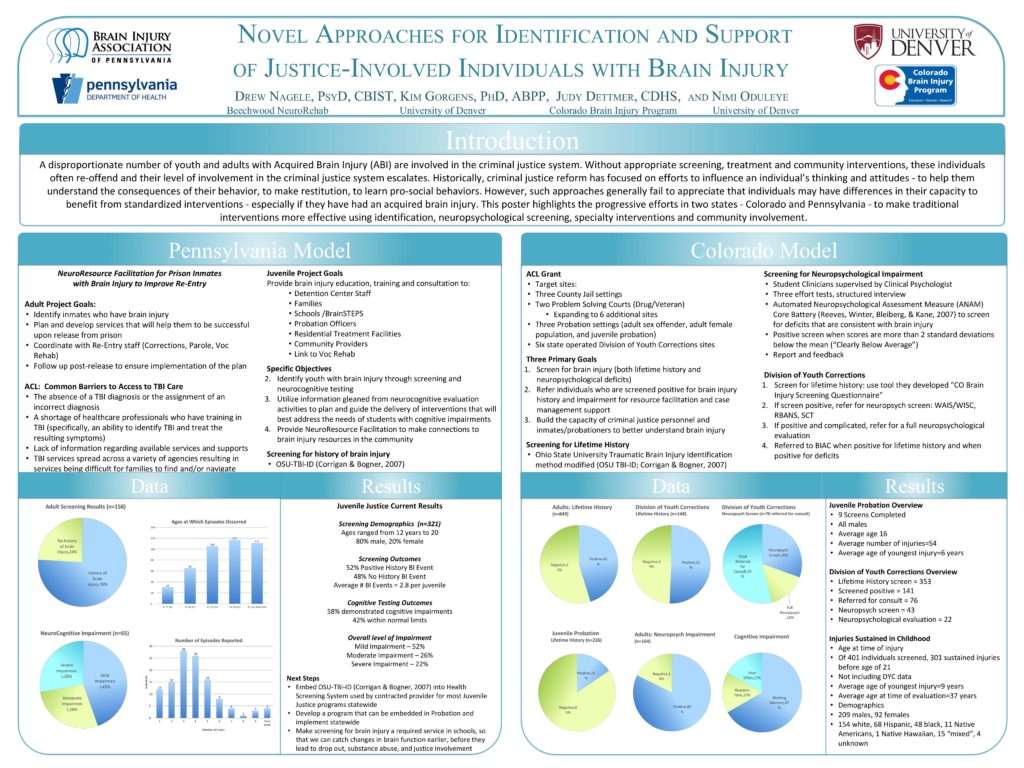
Traditional criminal justice reform focuses on efforts to influence an individual’s thinking and attitudes – to help them understand the consequences of their behavior, to make restitution, to learn pro-social behaviors. These approaches may not work for individuals with TBI and this article provides information on how to make traditional methods more effective.
Read More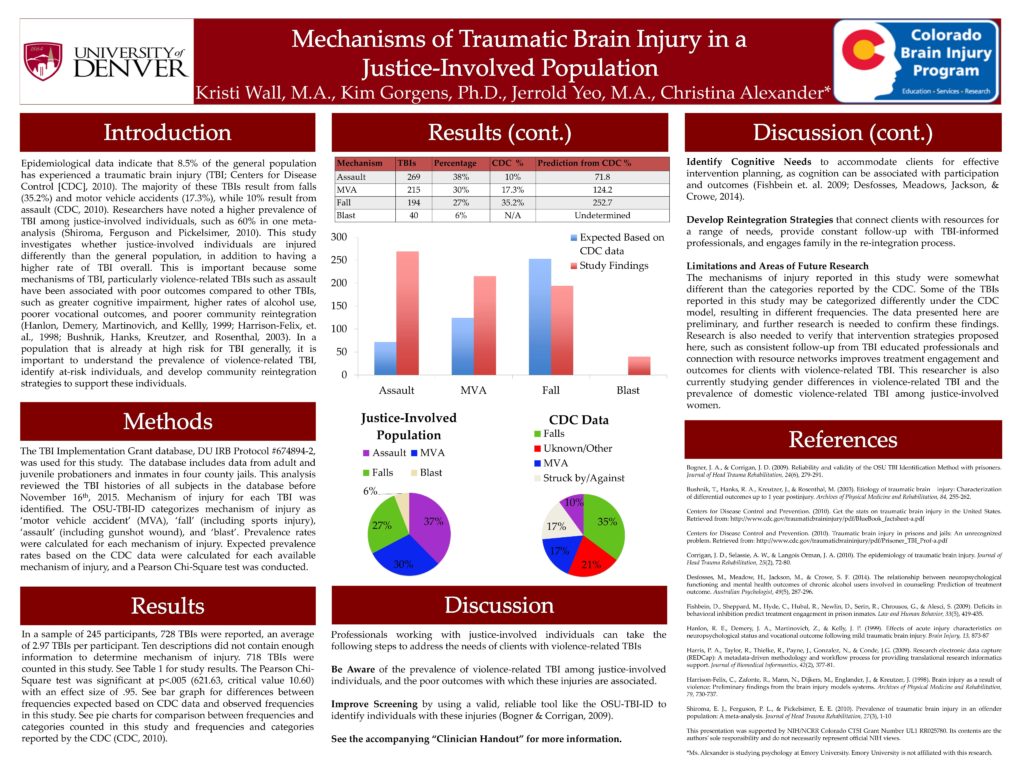
Some mechanisms of TBI, particularly violence related TBIs such as assault have been associated with poor outcomes compared to other TBIs, such as greater cognitive impairment, higher rates of alcohol use, poorer vocational outcomes, and poorer community reintegration.
Read More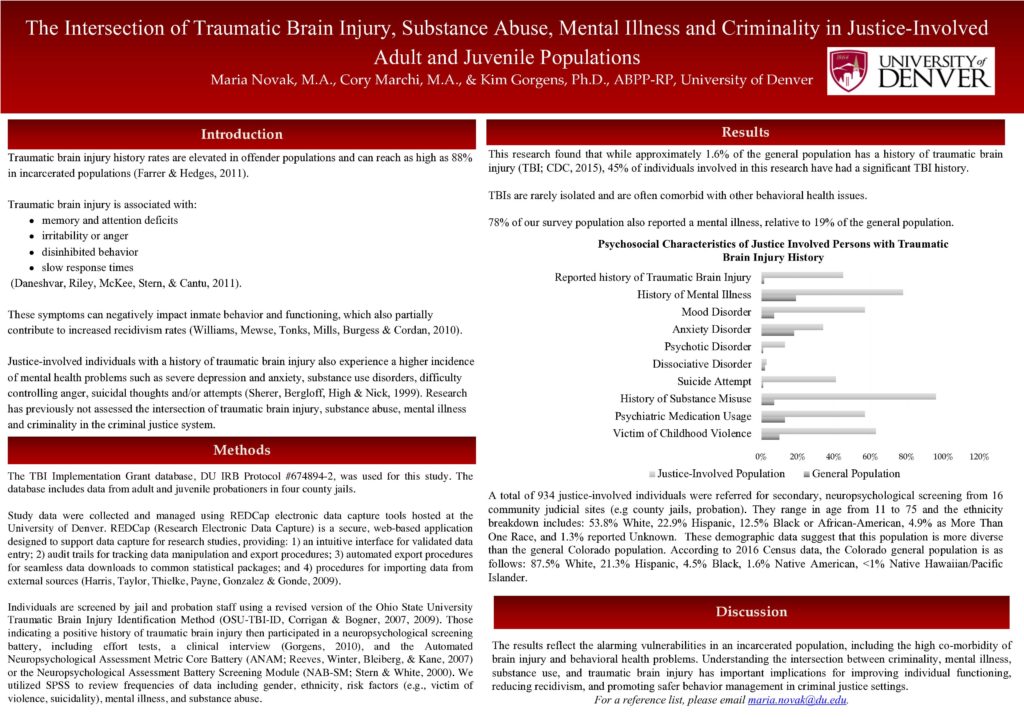
Understanding the intersection between criminality, mental illness, substance use, and traumatic brain injury has important implications for improving individual functioning, reducing recidivism, and promoting safer behavior management in criminal justice settings.
Read More